How Atlanta Homeowners Are Cutting Costs: A Look at Real Estate Commissions, Solar Panels, and More
Atlanta homeowners are feeling the squeeze. As property values climb, so do property taxes, and the everyday costs of maintaining a home—from electricity to insurance—seem to be in a constant state of ascent. Owning a home in this vibrant city is a fantastic investment, but it’s also one of the most significant financial responsibilities you’ll ever undertake.

Here at canyoncharterfishingboat.com, we’re experts in planning for a successful day on the water. It takes strategy, knowledge, and the right tools. We believe the same principles apply to managing your biggest asset: your home. Smart financial planning doesn’t just save you money; it frees you up to enjoy the rewarding experiences life has to offer—like a perfect day of fishing. This guide will provide a comprehensive look at the actionable strategies real Atlanta homeowners are using to cut significant costs, from navigating real estate transactions and harnessing solar power to making savvy everyday financial choices.
Key Takeaways
- Negotiating real estate commissions or using alternative brokerage models can save Atlanta sellers thousands of dollars on one of the largest transaction costs.
- Federal and state incentives make solar panel installation a viable long-term investment for reducing or eliminating electricity bills in Georgia, with a federal tax credit of up to 30%.
- Proactively appealing your property tax assessment and ensuring you have a homestead exemption filed are critical cost-cutting measures for metro Atlanta residents.
- Simple energy efficiency upgrades and regularly shopping for homeowners insurance can lead to substantial annual savings on recurring bills.
- The ultimate goal of cutting home costs is to increase disposable income for lifestyle experiences and long-term financial freedom.
TL;DR
Atlanta homeowners can significantly reduce expenses by negotiating real estate commissions, investing in solar panels to leverage tax credits, appealing property tax assessments, improving home energy efficiency, and annually shopping for better homeowners insurance rates. These savings free up funds for lifestyle goals and financial security, which you can explore further by reviewing our site’s resources.
Atlanta Homeowners Can Save Thousands by Negotiating Real Estate Commissions
Reducing the cost of real estate commissions is one of the most impactful ways for Atlanta homeowners to save a substantial amount of money when selling their property. The traditional commission structure, while long-standing, is no longer the only option available in a competitive market.
Understanding the Standard 5-6% Commission Structure in Atlanta
Traditionally, the total real estate commission for a home sale in the U.S. hovers between 5% and 6% of the final sale price. In Atlanta, this figure is standard practice. This fee is not paid to a single agent; it’s typically split down the middle. Half goes to the brokerage representing the seller (the listing agent), and the other half goes to the brokerage representing the buyer. For a $500,000 home sale, a 6% commission amounts to a staggering $30,000. While this fee covers marketing, showings, negotiations, and expert guidance through a complex legal transaction, it represents a significant portion of a seller’s equity.
Exploring Modern Alternatives: Discount Brokerages and Flat-Fee Services
The digital age has introduced new models that challenge the traditional commission structure. Atlanta homeowners now have access to a variety of alternatives designed to lower costs.
- Discount Brokerages: Companies like Redfin operate on a lower commission model, often charging a listing fee of 1% to 1.5% instead of the typical 2.5% to 3%.
- Flat-Fee MLS Services: For a set price, sellers can have their property listed on the Multiple Listing Service (MLS), the primary database used by real estate agents. This is a more hands-on approach, as the seller is often responsible for photography, showings, and negotiations.
- 1% Commission Models: A growing number of brokerages are specializing in cost-saving structures. For instance, the services offered by 1 Percent Lists Peach State are designed specifically to help Atlanta homeowners save thousands by listing homes for a significantly reduced commission. This model provides the key service of an MLS listing and agent support while maximizing the seller’s net proceeds.
Actionable Tips for Negotiating with Your Real Estate Agent
Even if you choose a traditional agent, the commission is often negotiable. Don’t be afraid to have an open conversation about fees before signing a listing agreement.
- Interview Multiple Agents: Competition works in your favor. When agents know you are speaking with others, they may be more willing to be flexible on their commission.
- Leverage Your Home’s Value: If you own a high-value property in a desirable Atlanta neighborhood, your home may be an easier sale. Use this as a bargaining chip to negotiate a lower percentage.
- Ask About Flexible Structures: Some agents may agree to a tiered commission, where the percentage decreases if the home sells above a certain price. Others might reduce their fee if they also represent you in the purchase of your next home. When you interview agents, you can compare their traditional models against the significant savings offered by the specialized services of 1 Percent Lists Peach State.
Installing Solar Panels Offers Atlanta Residents Long-Term Savings and Valuable Tax Incentives
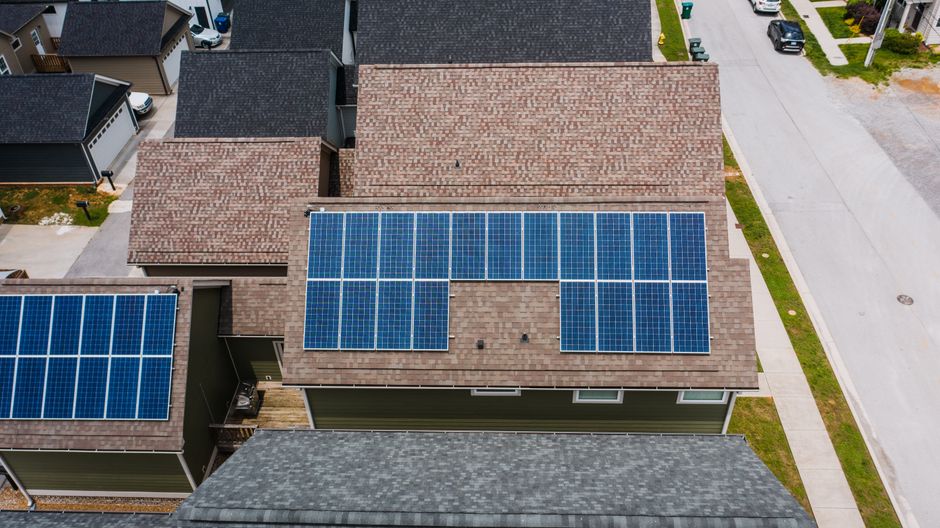
Harnessing solar power is a powerful strategy for Atlanta homeowners to reduce or even eliminate their monthly electricity bills while taking advantage of significant government incentives. Georgia’s ample sunshine makes it a prime location for residential solar energy production.
The Financial Case for Solar in Georgia
The primary driver for solar adoption is the Residential Clean Energy Credit, formerly known as the Investment Tax Credit (ITC). This federal incentive allows homeowners to claim a tax credit for 30% of the total cost of a solar panel system installed on their home, according to the U.S. Department of Energy. There is no cap on the credit amount. For a $20,000 system, this translates to a $6,000 reduction in your federal tax liability.
Additionally, Georgia Power’s net metering program allows homeowners to sell excess electricity their panels generate back to the grid, further offsetting costs. While the break-even point varies based on system size and energy consumption, many Atlanta homeowners find their investment pays for itself within 8-12 years, leading to decades of free electricity thereafter.
Leasing vs. Buying Solar Panels: Which Is Right for You?
When going solar, you have several financing options. The best choice depends on your financial goals and situation.
| Feature | Buying (Cash or Loan) | Solar Lease / PPA |
|---|---|---|
| Upfront Cost | High | Low to None |
| Ownership | You own the system | Third-party owns the system |
| Tax Credits | You claim the 30% federal credit | The leasing company claims the credit |
| Long-Term Savings | Highest potential; eliminates bill | Modest savings; fixed monthly payment |
| Home Value | Can increase home’s resale value | Can complicate a home sale |
| Maintenance | Your responsibility | Leasing company handles maintenance |
Finding a Reputable Solar Installer in the Atlanta Area
Choosing the right installer is critical for a successful solar project. Look for professionals with a proven track record in the metro Atlanta area.

- Check Certifications: Prioritize installers with North American Board of Certified Energy Practitioners (NABCEP) certification, the gold standard in the solar industry.
- Read Reviews: Look at reviews on Google, Yelp, and solar-specific sites to gauge customer satisfaction.
- Get Multiple Quotes: Always obtain at least three detailed quotes to compare equipment, warranties, and pricing.
Challenging Your Property Tax Assessment is a Key Way Atlanta Homeowners Can Lower Annual Costs
Metro Atlanta homeowners can achieve significant annual savings by ensuring their property tax assessment is fair and accurate, a strategy that is powerful yet frequently overlooked. Your annual tax bill is directly tied to the value your county assigns to your home, and you have the right to challenge that value.
How to Read Your Fulton or DeKalb County Property Assessment Notice
Each year, you’ll receive an Annual Assessment Notice in the mail. It’s crucial to understand what it says.
- Assessed Value: In Georgia, this is legally set at 40% of the fair market value.
- Fair Market Value: This is the county’s estimate of what your home would sell for on the open market.
- Appeal Deadline: This is the most critical piece of information. It’s typically 45 days from the date the notice is mailed, and it is a firm deadline.
If the county’s “Fair Market Value” seems higher than what comparable homes in your neighborhood have recently sold for, you have a strong case for an appeal.
The Homestead Exemption: The Easiest Money You’ll Ever Save
The Homestead Exemption is a tax break available to homeowners for their primary residence. It reduces the assessed value of your home, thereby lowering your property tax bill. If you own and occupy your home as of January 1st, you qualify. Applying is a one-time action that provides savings every single year. You can apply online through your county’s tax assessor website:
- Fulton County: Fulton County Board of Assessors
- DeKalb County: DeKalb County Tax Commissioner
A Step-by-Step Guide to Filing a Property Tax Appeal
If you believe your home is overvalued, filing an appeal is a straightforward process.
- Gather Evidence: Find 3-5 “comps”—comparable properties in your immediate area that have recently sold for less than your home’s assessed market value. You can find this data on county tax websites or real estate sites like Zillow.
- File the Appeal: Complete the appeal form found on your county assessor’s website before the deadline. You can typically file online, by mail, or in person.
- Choose Your Appeal Path: You’ll usually have three options: appeal to the Board of Equalization (a panel of citizens), a Hearing Officer (for non-homesteaded properties valued over $750,000), or Arbitration. The Board of Equalization is the most common path for homeowners.
- Prepare for the Hearing: Organize your evidence clearly. Present your comps and be prepared to explain why your property’s assessed value is too high compared to actual market sales.
Simple Home Energy Audits and Upgrades Can Drastically Reduce Monthly Utility Bills
Atlanta homeowners can significantly lower their monthly utility bills, especially during the hot and humid summer months, by performing a simple energy audit and making targeted, high-impact upgrades. Many of these improvements are low-cost and offer an immediate return on investment.
Perform a DIY Home Energy Audit
You don’t need to be an expert to spot major energy wasters in your home. Use this checklist to conduct your own audit:
- Check for Air Leaks: On a windy day, feel for drafts around windows, doors, electrical outlets, and where pipes enter your home. Seal any leaks with caulk or weatherstripping.
- Inspect Insulation: Look in your attic. If you can see the tops of the floor joists, you likely need more insulation. According to the U.S. Department of Energy, proper attic insulation is one of the most effective ways to reduce energy bills.
- Examine Your HVAC System: Are the filters clean? Clogged filters make your system work harder and use more energy.
- Review Appliances and Lighting: Are you still using old, inefficient appliances or incandescent light bulbs? Upgrading to ENERGY STAR-certified models and LED bulbs can lead to significant savings.
High-Impact, Low-Cost Upgrades for Atlanta’s Climate
- Weatherstripping and Caulking: Sealing air leaks is the cheapest and most effective way to improve energy efficiency.
- Attic Insulation: As mentioned, this is crucial for keeping your home cool in the summer and warm in the winter.
- Smart Thermostat: A programmable or smart thermostat can save you up to 10% a year on heating and cooling costs by automatically adjusting the temperature when you’re away or asleep.
- Ceiling Fans: Using ceiling fans allows you to raise the thermostat setting by about 4°F with no reduction in comfort, saving A/C-related energy costs.
Leveraging Rebates from Georgia Power and Atlanta Gas Light
Before you buy any new appliances or make upgrades, check for rebates. Local utility companies often provide financial incentives to encourage energy efficiency.
- Georgia Power offers rebates on smart thermostats, HVAC tune-ups, and home energy audits.
- Atlanta Gas Light provides rebates for upgrading to high-efficiency natural gas furnaces and water heaters.
Smart Financial Planning Frees Up Your Budget for the Experiences That Matter
Cutting homeownership costs isn’t just about pinching pennies; it’s about strategic financial management that unlocks new opportunities. Every dollar saved on a commission, a tax bill, or a utility payment is a dollar that can be redirected toward your life goals.
Turning Home Savings into a “Lifestyle Fund”
We encourage you to reframe cost-cutting not as deprivation, but as a strategy to fund what you truly value. Earmark the money you save from these strategies for a specific purpose. This “lifestyle fund” could be for a family vacation, a new hobby, early retirement, or simply the peace of mind that comes with financial security. By being proactive, you transform your home from a source of expenses into an engine for your aspirations.
From Cutting Costs to Casting Lines: Planning Your Reward
The thousands you save on a real estate commission or over years of lower energy bills can translate directly into unforgettable adventures. Imagine taking your family on a professionally guided charter fishing trip, creating memories that last far longer than the satisfaction of a slightly lower utility bill. That’s what we at canyoncharterfishingboat.com are all about—providing the world-class experiences that smart financial planning makes possible. The discipline you apply to your home finances can directly fund the rewards you and your family deserve.
Final Thoughts
Being a smart Atlanta homeowner means being proactive. By tackling major expenses like real estate commissions, exploring the long-term benefits of solar energy, ensuring your property taxes are fair, and boosting your home’s energy efficiency, you can take firm control of your financial future. These strategies are not just about saving money; they are about building a life that is richer in experiences, not just expenses. Start implementing these steps today and see how much financial freedom you can unlock from your single biggest asset. For more ideas on planning your next adventure, feel free to browse all our pages.